
Why I Choose Ancient Grains
Milling ancient grains for making my sourdough is beneficial for several reasons. I use a grain mill to turn organic grain berries and make fresh flour (which significantly enhances the flavor and quality of my bread.) But why go to all that trouble? Isn’t all sourdough, “good for you..?”
I promise this is not a post on being hateful towards white pre-processed flour – there is a place for it, especially in treats where nutrition is not our focus.
Milling my own flour allows me to capture the nutrients in the bran and germ of the grain kernel. Grinding flour as close to the time of baking as possible lets us enjoy the benefit of the vitamins, minerals, antioxidants and other nutrients that are released from the kernel by milling.
There are 3 parts to a wheat berry (whole grain seed):
- The bran is loaded with fiber and nutrients
- The germ offers vitamins, protein, minerals, and oil
- The endosperm is the part of the wheat berry that is loaded with a lot of starch.
Even the best flour that we can purchase on the grocery store shelves, has very little, nutritional value due to traditional processing (we basically only get to eat the endosperm). Milling my own flour allows me to retain as many nutrients as possible!
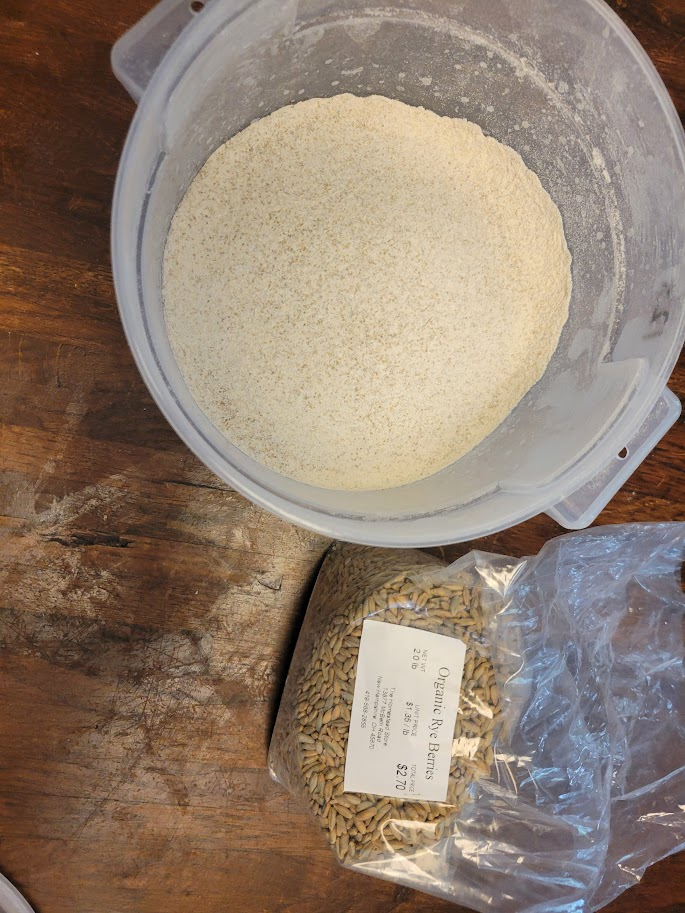
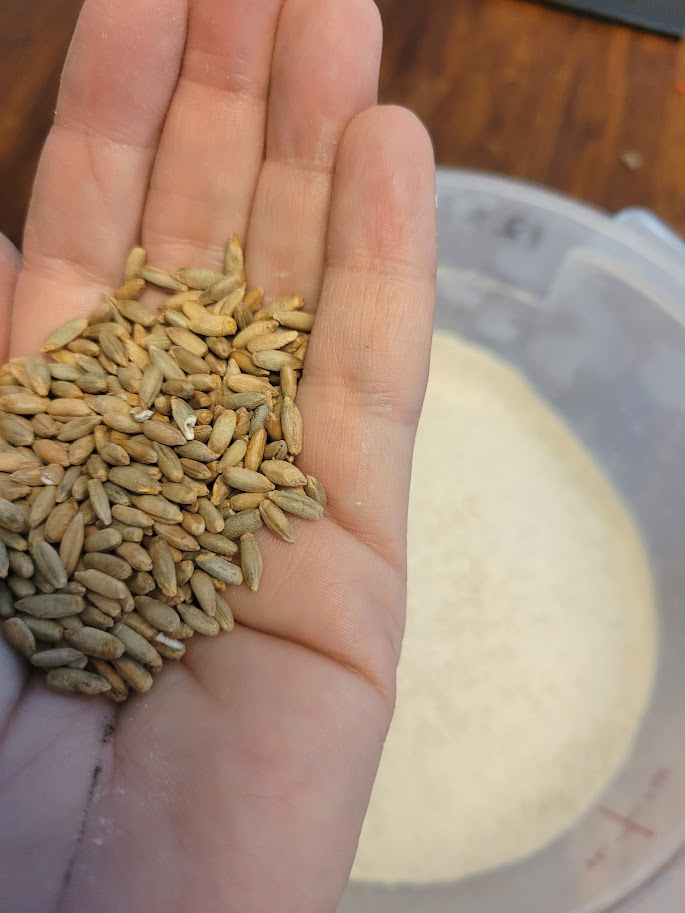
Nutritional Benefits: Ancient grains like spelt, einkorn, Khorasan, and emmer are often more nutrient-dense compared to modern wheat. They contain higher levels of protein, fiber, and various vitamins and minerals. This enhances the nutritional profile of your sourdough bread.
Flavor and Texture: Ancient grains tend to have unique, rich flavors and different textures compared to modern wheat. For instance, spelt has a slightly nutty taste, while einkorn has a more delicate, sweet flavor. Khorason (Kamut) is more buttery. These contribute to a more complex and interesting flavor profile in my sourdough.
Fermentation Characteristics: Ancient grains interact differently with the my sourdough starter. Some have different gluten structures or levels of enzyme activity that influences the fermentation process. This can lead to distinctive sourdough characteristics, such as variations in crumb texture and rise.
Digestibility: Some people find ancient grains easier to digest than modern wheat. This might be due to their different gluten structures or higher levels of certain nutrients and antioxidants. This could be beneficial for individuals with mild sensitivities, though it’s not a cure for wheat allergies or celiac disease.
Historical and Traditional Aspects: Using ancient grains connects me with traditional bread-making practices. These grains have been used for thousands of years, and incorporating them into my sourdough can be a way to honor and continue these historical baking traditions.
White Flour vs. Whole Wheat Flour: I do not like to think white flour is “bad” – everything is fine in moderation. If you want to obtain more nutrition from your bread (why you are likely a fan of sourdough, to begin with) do know that the nutrition profile of the loaf depends on which type of flour is used, with white flour having less fiber and nutrients and whole-grain flour having more nutrition